Most gum disease can be managed with professional cleanings, improved home care, and regular monitoring. But for some patients, the disease has progressed far enough that these measures are no longer enough.
When bacteria have moved deep below the gumline and the bone supporting the teeth has been damaged, a more targeted approach is needed. Osseous surgery in Weston is one of the most effective treatments available for advanced gum disease — and understanding what it involves helps patients feel informed and prepared before making any decisions.
What Is Osseous Surgery?
Osseous surgery — also called pocket reduction surgery — is a periodontal procedure that treats advanced gum disease by accessing the tissue and bone beneath the gumline.
When gum disease progresses, pockets form between the gums and teeth. Healthy pockets measure one to three millimetres.
In patients with advanced periodontitis, these pockets can deepen to five millimetres or more—creating spaces where bacteria thrive, plaque accumulates, and cleaning becomes impossible even with professional instruments.
Osseous surgery for advanced gum disease directly addresses these deep pockets by:
- Folding back the gum tissue to access the bacteria and tartar beneath
- Removing all infected tissue, tartar, and bacteria from the root surfaces
- Reshaping or smoothing the damaged bone to eliminate the irregular surfaces where bacteria hide
- Repositioning the gum tissue and closing it with sutures so it fits more snugly around the teeth
The goal is to reduce pocket depth, eliminate infection, and create an environment that can be maintained with regular professional care going forward.
What Is Bone Reshaping in Osseous Surgery?
Bone reshaping surgery for periodontal pockets is an important part of the osseous surgery process that many patients want to understand better.
When gum disease damages the bone, it often creates irregular craters and ledges on the bone surface. These uneven areas trap bacteria and are impossible to clean — even after the gum tissue is treated.
During osseous surgery in Weston, the periodontist carefully smooths and reshapes these irregular bone surfaces. This removes the hiding places for bacteria and helps the gum tissue reattach more evenly to the bone and teeth afterward.
Without this reshaping step, pockets are more likely to redevelop, and the disease is more likely to return.
When Is Osseous Surgery Needed?
Not every patient with gum disease needs surgery. Your periodontist will assess several factors before recommending osseous surgery near you.
It is typically recommended when:
- Periodontal pockets measure five millimetres or deeper and have not responded to non-surgical treatment
- Deep scaling and root planing a thorough non-surgical cleaning—have been completed, but pockets remain
- Bone loss is visible on X-rays around one or more teeth
- Bacteria continue to accumulate in areas that cannot be reached with standard cleaning tools
- Teeth are at risk of being lost without surgical intervention
A dentist in Weston or a periodontal specialist will evaluate your X-rays, pocket measurements, and overall oral health before determining whether surgery is the appropriate next step.
What to Expect Before, During, and After Osseous Surgery
Before the procedure:
- The full periodontal examination, including radiographs, is taken
- Scaling and root planing treatment is checked for efficacy
- A review of the patient’s medical history and medications is conducted
- Pre-surgical instructions—including any fasting requirements or medication adjustments—are provided
During the procedure:
- A local anesthetic is applied to numb the area completely
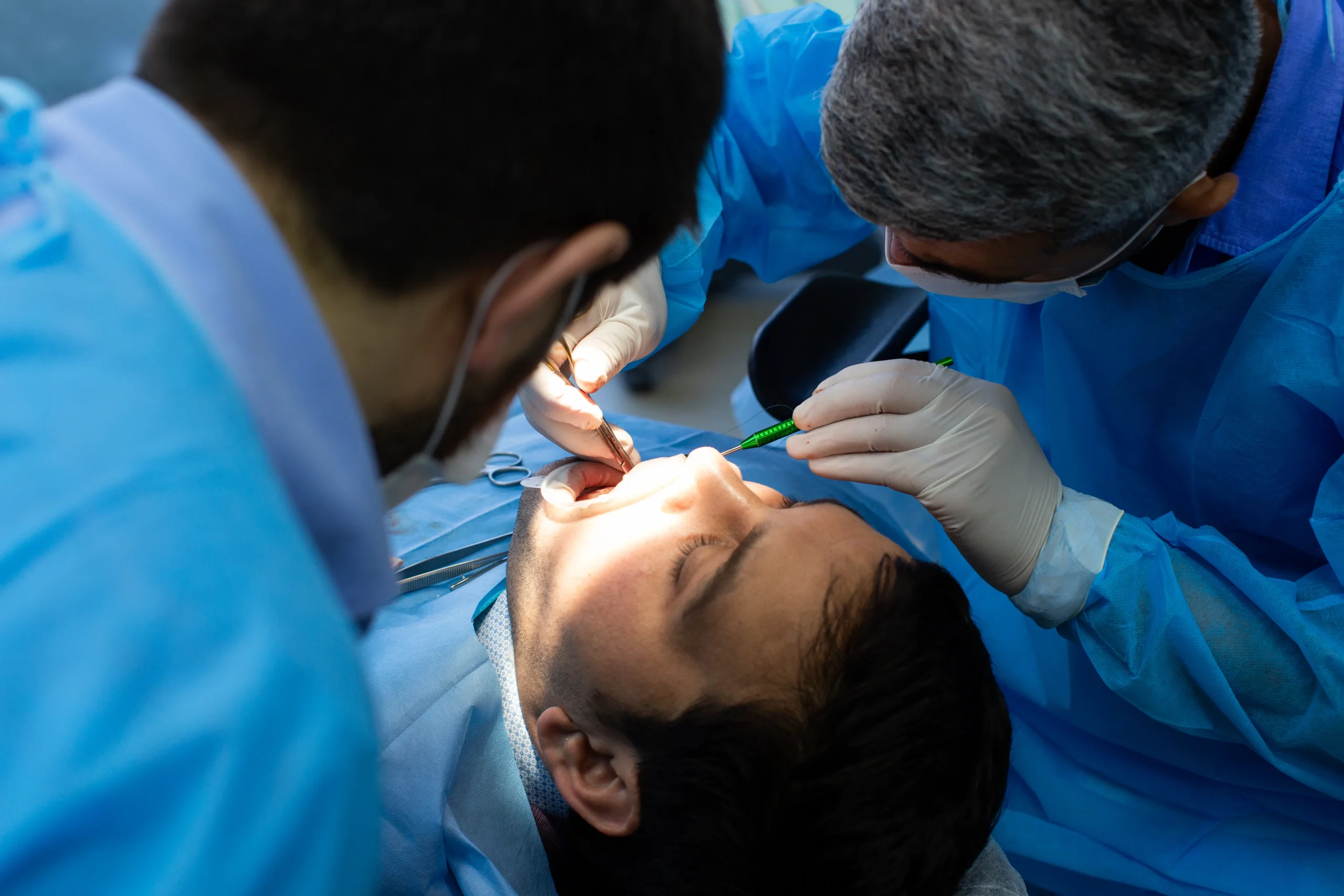
- The gum tissue is gently folded back to expose the roots and bone
- All tartar, bacteria, and infected tissue are removed thoroughly
- The bone is carefully reshaped to eliminate irregular surfaces
- The gum tissue is repositioned and closed with sutures
Most patients feel only pressure and movement during the procedure — not pain. The area is thoroughly numbed before anything begins.
After the procedure:
| What to Expect | How Long It Lasts |
| Swelling and mild bruising | 2 to 5 days |
| Tenderness around the treated area | 3 to 7 days |
| Soft food diet recommended | 1 to 2 weeks |
| Suture removal appointment | 7 to 10 days after surgery |
| Full gum tissue healing | 4 to 6 weeks |
| Bone stabilisation | Several months |
How to Care for Your Mouth After Osseous Surgery
Recovery goes more smoothly when patients follow their aftercare instructions carefully.
Key aftercare steps include:
- Take all prescribed medications—including antibiotics and pain relief—exactly as directed
- Eat soft foods only for the first one to two weeks—yogurt, mashed potatoes, scrambled eggs, and soup
- Do not brush the surgical area until your periodontist advises it is safe to do so
- Rinse gently with a prescribed antibacterial mouthwash as directed
- Avoid smoking—it significantly slows healing and increases the risk of complications
- Avoid strenuous exercise for the first few days
- Attend your follow-up appointment for suture removal and assessment
Find the Right Care for Your Periodontal Health
If you have been told you have advanced gum disease and surgery may be needed, seeking a specialist assessment is the most important next step. A knowledgeable dental office near you that specializes in periodontal treatment can evaluate your specific situation thoroughly and explain all available options before any decisions are made.
Advanced Periodontal Care You Can Trust — Dental Specialists of Weston Is Here
Advanced gum disease is serious — but with the right treatment at the right time, teeth that might otherwise be lost can often be saved. Osseous surgery is a well-established, effective procedure that gives patients the best possible chance of long-term oral health when non-surgical approaches have not been enough.
At Dental Specialists of Weston, we’re committed to bringing the highest level of specialist training, authentic compassion, and customized attention to everyone who enters our dental practice. Are you ready for a specialist evaluation, or do you want to proceed with treatment? We’ll lead you with honest knowledge.
Book your appointment with us today and take the first step toward healthier gums and a stronger smile.
Get directions to Dental Specialists of Weston and visit our office for osseous surgery and advanced periodontal care.
Frequently Asked Questions
How do I know if I need osseous surgery for gum disease?
Your periodontist will assess your pocket depths, X-rays, and response to previous non-surgical treatment—surgery is typically recommended when pockets remain five millimetres or deeper after scaling and root planing and bone loss is visible.
What happens during an osseous surgery procedure?
The gum tissue is gently folded back to expose the roots and bone; all infection and tartar are thoroughly removed; the bone is reshaped to eliminate irregular surfaces, and the gum tissue is repositioned and closed with sutures.
How long is the recovery period after osseous surgery?
Most patients feel significantly better within one to two weeks; full gum tissue healing takes four to six weeks, while complete bone stabilization may take several months depending on the extent of the disease treated.
Can osseous surgery help save loose teeth caused by periodontal disease?
Yes – by removing infection, reducing pocket depth, and stabilizing the surrounding bone, osseous surgery can often halt the progression of disease and help save teeth that would otherwise be at high risk of being lost.